
suzuki cello book 3 pdf
Suzuki Cello Book 3 PDF: A Comprehensive Guide
Suzuki Cello Book 3 represents a significant step, introducing fourth position, scales, etudes, and trills; a PDF version facilitates focused practice and study.
Understanding the Suzuki Method

The Suzuki method, founded by Shinichi Suzuki, is a unique approach to music education rooted in the belief that musical ability can be developed in every child, much like learning a native language. This philosophy emphasizes immersion, ear training, and a nurturing learning environment. Unlike traditional methods focusing on sheet music from the outset, Suzuki learning begins with listening and imitation.
Students learn pieces aurally before attempting to read the notation, fostering a strong musical intuition and tone. Parental involvement is crucial, as parents actively participate in lessons and practice sessions. The method progresses through a carefully sequenced series of books, each building upon the skills acquired in the previous one. Suzuki Book 3 continues this immersive process, but increasingly expects students to correlate notation with finger placement, a challenge for some, especially those new to reading music.
The Progression from Book 1 & 2 to Book 3
Transitioning to Suzuki Book 3 marks a notable increase in technical and musical demands. Books 1 and 2 establish foundational skills – proper posture, bow hold, left-hand technique in first and third positions, and basic rhythm reading. Students primarily focus on developing a beautiful tone and learning to play in tune through repetition and ear training.
Book 3 builds upon this foundation by introducing the challenging fourth position, expanding the range and expressive possibilities of the cello. The repertoire becomes more complex, requiring greater musicality and interpretive skills. Students encounter scales and etudes designed to solidify technical proficiency, alongside trill exercises to enhance dexterity. This progression necessitates a stronger understanding of music theory and the ability to independently correlate notation with fingerboard placement, a hurdle for some learners.
Typical Timeline for Completing Book 3
The duration to complete Suzuki Cello Book 3 varies significantly based on individual factors like prior musical experience, practice habits, and learning pace. One student reported approximately one year each for Books 1 and 2, followed by a year and three months – and ongoing work – on Book 3. This timeline highlights that Book 3 often presents the most substantial challenge.
Several elements contribute to this extended timeframe. The introduction of fourth position demands considerable time for accurate finger placement and coordination. Furthermore, developing bass clef reading proficiency and internalizing note names on the fingerboard can be slow processes, especially for adult learners or those without prior music theory knowledge. Consistent, focused practice, ideally with a qualified teacher, is crucial for navigating these hurdles and progressing efficiently.
Content Overview: Pieces Included in Book 3
Suzuki Cello Book 3 builds upon foundational skills with increasingly complex repertoire. While a definitive list varies slightly between editions, the book generally features a selection of pieces designed to solidify technique and musicality. Expect to encounter works that demand greater control of bowing, shifting, and intonation.
The progression in Book 3 introduces more advanced compositions, preparing students for standard cello literature. It’s noted that Volume 4 immediately presents a sonata, indicating Book 3 serves as a crucial bridge. The pieces within focus on developing a broader range of expression and stylistic interpretation, alongside the technical challenges of fourth position, scales, and trills.
Technical Skills Introduced in Book 3
Suzuki Cello Book 3 marks a pivotal stage in technical development, notably introducing and refining fourth position – a cornerstone skill for expanding range and versatility. Alongside this, students encounter a more rigorous focus on scales and etudes, designed to build finger dexterity, intonation accuracy, and bow control.

Trill drills are also a key component, fostering coordination and speed. The immersive nature of the Suzuki method means these skills are developed primarily through piece application, rather than isolated exercises. Mastering these elements prepares students for tackling more demanding repertoire, as evidenced by the immediate jump to a sonata in Volume 4.
Fourth Position – A Key Focus

Fourth position is central to Suzuki Cello Book 3, dramatically expanding the cello’s accessible range and opening doors to more complex musical expression. This position requires significant adjustments in hand frame and finger placement, demanding focused practice and careful attention to intonation.
The Suzuki approach introduces fourth position through repertoire, encouraging students to internalize the feel and sound within a musical context. While challenging, mastering this skill is crucial for progressing to higher levels of cello playing. It’s a fundamental technique that unlocks a wealth of possibilities, allowing for smoother transitions and richer tonal colors.

Scales and Etudes
Suzuki Cello Book 3 integrates scales and etudes to solidify technical skills and build a strong foundation for musicality. These exercises aren’t presented in isolation, but rather interwoven with the repertoire, reinforcing concepts learned through pieces. Scales develop intonation, finger dexterity, and bow control, while etudes address specific technical challenges.
The focus isn’t merely on mechanical accuracy; students are encouraged to apply musical expression even to these foundational exercises. Consistent practice of scales and etudes builds muscle memory and prepares the cellist for more demanding passages. They serve as essential tools for refining technique and enhancing overall performance quality.
Trill Drills and Development
Suzuki Cello Book 3 introduces trills, a crucial expressive technique demanding coordination and precision. Initial exercises focus on developing a relaxed wrist and finger motion, essential for a clear and even trill. Students begin with simple two-note trills, gradually increasing speed and complexity.
The PDF resource allows for slowed playback, aiding in accurate practice and identifying areas for improvement. Drills emphasize consistent rhythm and evenness of tone. Mastering trills enhances ornamentation and adds nuance to performances. Patience and consistent effort are key, as trills require significant muscle development and coordination.
Challenges Students Face in Book 3
Suzuki Cello Book 3 presents several hurdles for students. A primary challenge is mastering music reading, particularly the bass clef, which can be slow for those without prior musical theory knowledge. Simultaneously, correlating notes on the page with fingerboard positions proves difficult, compounded by the need to learn note names on the fingerboard itself.
Adult learners often face additional obstacles, including reduced hand flexibility and slower learning curves. Physical limitations, like collapsing joints, may necessitate assistive devices like ring splints. The Suzuki method’s immersion approach, lacking explicit instruction, can also be confusing, requiring independent problem-solving and potentially supplemental materials.
Reading Music and Bass Clef Proficiency
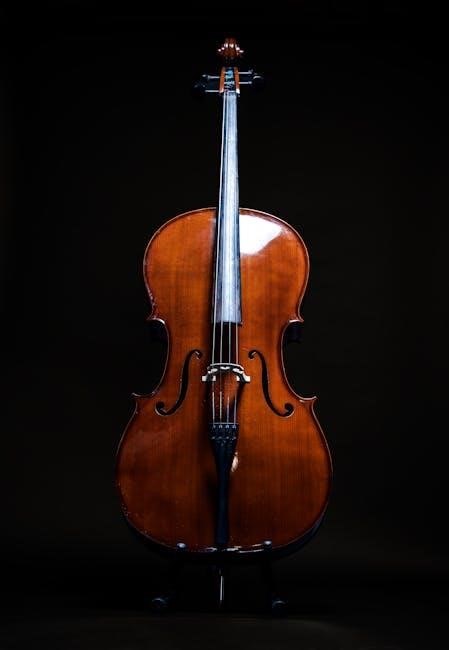
Suzuki Cello Book 3 demands increased music reading skills, notably in the bass clef, which often presents a significant challenge. Students without a strong music theory background may struggle to decipher notation quickly and accurately. The Suzuki method prioritizes learning by ear and imitation, sometimes at the expense of explicit instruction in reading.
This can lead to difficulties in independently learning new pieces and understanding the underlying musical structure. Successfully navigating Book 3 requires dedicated effort to develop bass clef proficiency, alongside correlating written notes with fingerboard positions. Consistent practice and supplemental exercises focused on note recognition are crucial for overcoming this hurdle.

Note Recognition on the Fingerboard
Suzuki Cello Book 3 introduces more complex fingerings and positions, making immediate note recognition on the fingerboard essential. Many students, particularly those new to string instruments or lacking prior musical experience, find this a considerable challenge. The Suzuki method’s emphasis on aural learning can sometimes delay the development of a strong connection between note names and their physical locations.
Memorizing note positions across the fingerboard takes time and dedicated practice. It’s common for learners to initially rely on visual cues from the sheet music rather than internalizing the fingerboard map. Consistent drills, coupled with actively naming notes while playing, are vital for building fluency and accelerating note recognition skills.
Physical Considerations for Adult Learners
Suzuki Cello Book 3 demands increased physical dexterity and stamina, presenting unique challenges for adult learners. Unlike younger students, adults may experience decreased flexibility, joint stiffness, or pre-existing physical limitations. The introduction of fourth position, a core element of this book, requires significant hand and finger strength, potentially exacerbated by age-related changes.
Adult learners often benefit from incorporating warm-up exercises and mindful practice techniques to prevent injury and manage discomfort. Conditions like collapsing joints, as experienced by some, may necessitate supportive aids like ring splints. Patience and realistic expectations are crucial; progress may be slower, and consistent, gentle practice is more effective than pushing through pain.
Supplementary Materials for Book 3
Suzuki Cello Book 3 benefits greatly from supplemental resources that address its inherent challenges. While the Suzuki method emphasizes immersion, additional materials can reinforce music theory concepts, particularly bass clef reading, which many adult learners find demanding. Etude books focusing on specific technical skills – scales, arpeggios, and trills – complement the pieces in the book, providing targeted practice.
Resources like “Essential Elements 2000” offer a more traditional approach with explicit instruction and composer background, bridging gaps in the Suzuki curriculum. “After 5” provides a pathway beyond the standard repertoire. Utilizing a metronome and recording oneself practicing are also valuable supplementary tools for self-assessment and improvement.
Comparing Suzuki Book 3 to Other Cello Methods
Suzuki Book 3 distinguishes itself through its emphasis on learning by ear and rote memorization, contrasting with methods like “Essential Elements 2000,” which prioritize comprehensive music theory and detailed instruction. While Suzuki immerses students in repertoire, potentially causing confusion due to limited explicit guidance, “Essential Elements” offers a structured, step-by-step approach.
“After 5” serves as a valuable bridge, supplementing Suzuki with additional pieces and technical exercises. Suzuki’s progression can feel abrupt – throwing students into a sonata in Book 4 – whereas other methods build skills more gradually. The choice depends on learning style; Suzuki suits those who thrive on immersion, while others benefit from explicit instruction and theoretical grounding.

Essential Elements 2000: An Alternative Approach
Essential Elements 2000 presents a stark contrast to the Suzuki method, offering a highly structured and pedagogically sound approach to cello learning. Unlike Suzuki’s immersion style, it prioritizes a strong foundation in music theory, note reading, and rhythmic understanding from the outset. This method provides detailed explanations, composer biographies, and musical context, elements often absent in the Suzuki repertoire.
For self-learners or students needing explicit instruction, Essential Elements is exceptionally beneficial. It avoids the potential for feeling “lost” simply reading music, a common challenge with Suzuki. The gradual progression in volumes 1 and 2 builds confidence and technical proficiency, making it an excellent alternative or supplementary resource to the Suzuki method, particularly for those struggling with bass clef.
“After 5” – Bridging the Gap
“After 5” emerges as a valuable resource for students transitioning beyond the Suzuki method, particularly after completing Book 3. Recognizing the abrupt leap into complex pieces like sonatas in Book 4, “After 5” provides a curated selection of repertoire designed to bridge this gap. It offers a smoother progression, reinforcing skills developed in the Suzuki books while introducing new challenges at a manageable pace.
This supplementary material is especially helpful for self-taught students who may benefit from more guidance than the Suzuki method traditionally provides. It complements the standard Suzuki repertoire, offering a broader musical experience and fostering a more well-rounded cello education. It’s a practical solution for those seeking a less daunting path forward.
Finding a Suzuki Cello Book 3 PDF
Locating a Suzuki Cello Book 3 PDF requires careful navigation. While numerous websites offer downloadable PDFs, verifying their legitimacy is crucial. Official Suzuki Association resources or reputable music retailers are the safest sources. Be wary of free downloads from unknown sites, as these may contain incomplete, inaccurate, or even malicious content.
A quick online search will yield several results, but prioritize those linking to established music education platforms. Consider purchasing a digital copy from a trusted vendor to support the copyright holders and ensure a high-quality, complete version. Remember to always check for watermarks or restrictions on usage before relying on a downloaded PDF for teaching or performance.
Legality and Ethical Considerations of PDF Downloads
Downloading a Suzuki Cello Book 3 PDF without proper authorization raises significant legal and ethical concerns. Copyright law protects the intellectual property of the composers, arrangers, and publishers. Illegally obtaining a PDF constitutes copyright infringement, potentially leading to legal repercussions.
Ethically, supporting the creators of educational materials is paramount. Purchasing a legitimate copy – whether physical or digital – ensures they receive compensation for their work, enabling continued development of valuable resources. Utilizing illegally downloaded PDFs undermines this system and discourages future contributions to the cello learning community. Respecting copyright fosters a sustainable environment for music education.
Utilizing the PDF Effectively for Practice
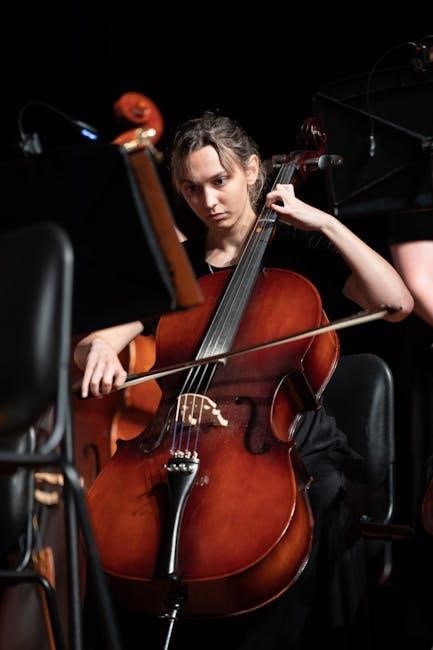
A Suzuki Cello Book 3 PDF offers unique practice advantages. Annotation and marking scores directly on the PDF allows for personalized fingering, bowing indications, and reminders of technical points – crucial for mastering fourth position, scales, and trills.
Leverage a PDF reader with playback features to listen to recordings alongside the score, enhancing ear training and rhythmic accuracy. Many readers allow looping sections for focused repetition. Digital formats facilitate easy access on various devices, promoting consistent practice. Remember, the Suzuki method emphasizes immersion, so actively listening while following the score is key to internalizing the music.
Annotation and Marking Scores
When working with a Suzuki Cello Book 3 PDF, actively annotating and marking scores is invaluable. Directly inputting fingerings, especially for the newly introduced fourth position, clarifies finger placement and builds muscle memory. Bowing indications – up, down, and specific techniques – enhance phrasing and tone quality.
Highlighting challenging passages or areas needing extra attention focuses practice efforts. Adding reminders about trill drills or scale patterns reinforces technical concepts. These personalized markings transform the PDF into a tailored learning tool, reflecting individual progress and needs. This active engagement deepens understanding beyond simply reading the notation.
Using a PDF Reader with Playback Features
Leveraging a Suzuki Cello Book 3 PDF alongside a reader with playback features significantly enhances learning. Many PDF readers allow importing or syncing with audio files – recordings of the pieces, ideally performed accurately. This enables “play-along” practice, fostering rhythmic precision and intonation.
Listening while following the score reinforces aural skills and internalizes musical phrasing. Some readers offer looping sections for focused repetition of difficult passages. Utilizing these tools mimics the immersive Suzuki method, where learning occurs through listening and imitation. This technology bridges the gap when a teacher isn’t immediately available, supporting independent practice and musical development.
Resources for Suzuki Cello Students

Beyond the Suzuki Cello Book 3 PDF itself, numerous resources support student progress. The Suzuki Association of the Americas (SAA) website ([https://suzukiassociation.org/](https://suzukiassociation.org/)) offers teacher directories, event listings, and pedagogical materials. Online forums and communities connect students and teachers for shared learning and support.
Supplemental sheet music, including etudes and scales, expands technical proficiency. Websites offering cello sheet music, often with playback options, prove invaluable. Consider “After 5” as a complementary resource, bridging gaps in instruction. Remember, consistent practice, guided by a qualified teacher, remains paramount. Utilizing these resources alongside the PDF maximizes learning potential and fosters a lifelong love of cello.
Finding a Qualified Suzuki Cello Teacher
While a Suzuki Cello Book 3 PDF provides materials, a qualified teacher is crucial for navigating its challenges. The Suzuki method emphasizes immersion and ear training, best guided by a certified instructor. The Suzuki Association of the Americas (SAA) maintains a comprehensive teacher directory ([https://suzukiassociation.org/](https://suzukiassociation.org/)), allowing you to locate instructors in your area.
Look for teachers with extensive experience and SAA certification levels. Consider trial lessons to assess teaching style and compatibility. A good teacher will address individual needs, correct technique, and foster musicality. Don’t hesitate to inquire about their approach to Book 3’s complexities, like fourth position and bass clef reading. A skilled teacher unlocks the PDF’s full potential.


Leave a Reply
You must be logged in to post a comment.